Vietnam practical information: the only official language here is Vietnamese, clocks stay on UTC+7 for the whole year with no daylight saving shift, and the tap water should not be drunk. From the rules on declaring currency to health precautions and digital arrival forms, this guide covers what to sort out before you land.
This page is an independent travel resource with no connection to any government. When you need the official entry rules and application forms, go to the Vietnam National e-Visa Portal. We never take fees or file applications for you. Before travelling, double-check every date and requirement on the official portals.
Language and Communication
Nearly 85% of people in Vietnam speak Vietnamese as their first language, and it is the country’s only official tongue as the UK FCDO reports. The 53 minority languages spoken here are usually paired with Vietnamese as a second language.
More and more people use English as a second language (language factfile from the UK FCDO). French, once the language of the colonial administration, has faded considerably.
The Vietnamese writing system is based on Roman script, with special letters such as Ă, Â, Ê, Ô, Ơ, Ư and Đ, and five tone marks placed on vowels. Pick up a handful of basic phrases if your plans include rural areas, since they help a great deal. In the big cities, English is usually enough in hotels, restaurants and tourist sites.
Time Zone, Currency, and Daily Logistics
The whole country keeps to UTC+7, known as Indochina Time, and never adjusts for daylight saving (country guide from MOFCOM). Hanoi sits one hour behind Beijing.
Money here is the Vietnamese dong (VND), and it cannot be converted freely. On arrival or departure you have to declare foreign cash or traveller’s cheques worth more than USD 5,000, or over 15 million VND (Smartraveller), as well as gold above 300 grams (MOFCOM country guide). Customs rules mean penalties apply if you fail to declare anything over those limits (MOFCOM country guide).
To enter without a visa, your passport must still be valid for six months or longer (e-Visa Portal). Much of the country closes down for Tet, the Lunar New Year, so arrange your transport with that in mind. The climate is tropical monsoon, with four seasons in the north, while the south divides into a wet season (May – September) and a dry season (October – April). For the entry conditions in force right now, consult the Vietnam National e-Visa Portal.
Tap Water Safety and Health Precautions
You should not drink tap water in Vietnam (Smartraveller). For every use, from cooking to brushing your teeth, rely on bottled or boiled water.
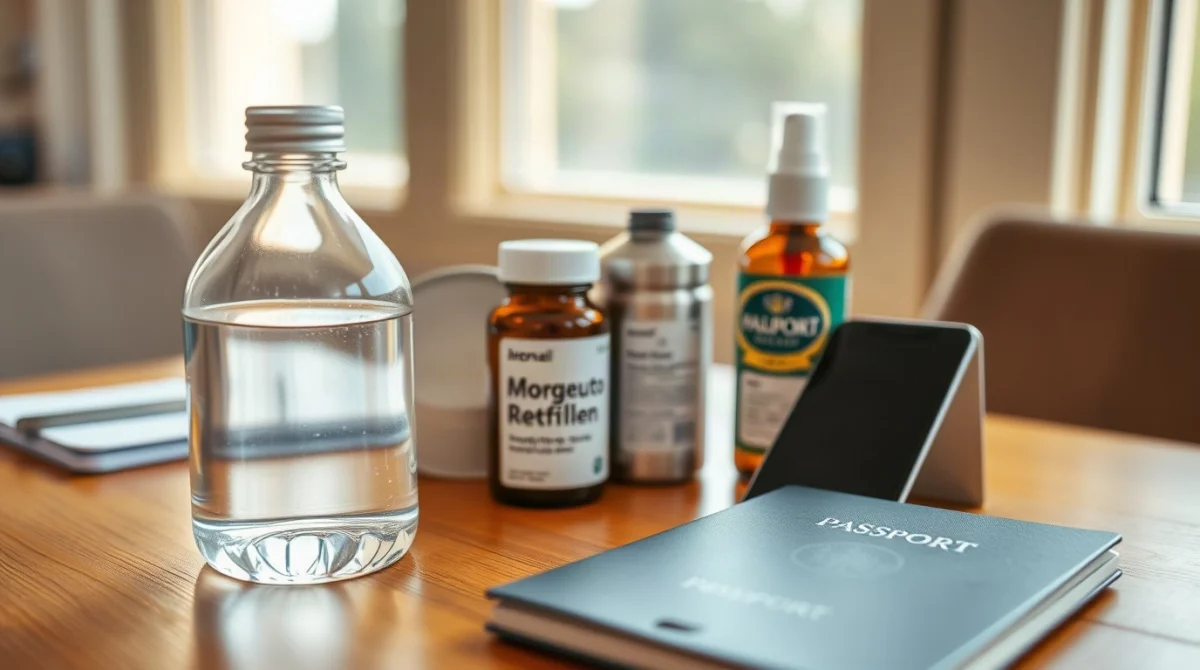
A health declaration, which can require proof of vaccinations, may be demanded of anyone travelling to or transiting through Vietnam (Smartraveller). Those landing at international airports including Ho Chi Minh City, Hanoi or Phu Quoc are encouraged to fill in a Digital Pre-Arrival Form online no more than 72 hours before arrival. The scheme is meant to reach further airports and land crossings, though no confirmed timeline exists.
Dengue fever, typhoid and hepatitis A are among the risks you may meet, so bring mosquito repellent and take care with street food. Anyone carrying prescription medication should look up the permitted import and export limits ahead of the trip. On domestic flights, carry the very same passport you presented on entry (Smartraveller).
Frequently Asked Questions (FAQ)
Is Vietnamese the only official language in Vietnam?
Yes. Vietnamese is the only official language, and nearly 85% of the population speaks it as a first language, while most people who speak a minority language also use it as a second. English is growing as a second language too. A few Vietnamese phrases go a long way in rural regions.
Which time zone is used by Vietnam, and is daylight saving time observed there?
UTC+7, or Indochina Time, applies in Vietnam throughout the year. Daylight saving time is not observed, so clocks stay put through the seasons. Arriving from a country that changes its clocks? Check your local arrival time twice.
Is it possible for me to drink tap water in Vietnam?
No. Drinking tap water in Vietnam is not safe. Choose bottled water, or water that has been thoroughly boiled, for drinking, cooking and brushing your teeth.
Which currency is used in Vietnam, and can it be converted freely?
The currency is the Vietnamese dong (VND), and it is not freely convertible. On arrival or departure, foreign cash or traveller’s cheques above USD 5,000, more than 15 million VND, or gold over 300 grams must be declared.
What amount of cash am I permitted to bring into Vietnam without declaring it?
Without declaring anything, you may bring in up to USD 5,000 in foreign currency, traveller’s cheques included, or 15 million VND. Anything beyond those thresholds has to be declared at customs, otherwise Vietnamese customs rules carry a fine (MOFCOM country guide).
Am I required to fill out a Digital Pre-Arrival Form upon entering Vietnam?
At the main international airports, Ho Chi Minh City, Hanoi and Phu Quoc, arriving travellers are encouraged to submit a Digital Pre-Arrival Form online within 72 hours before landing. Extending the system to other border crossings is planned, but confirmation is still pending (Smartraveller).
What do I need to know regarding prescription medication in Vietnam?
Limits exist in Vietnam on how much prescription medication, in value and quantity, may be imported or exported. Check the permitted amounts on the official customs and immigration websites before your flight.
Which health risks are most frequently encountered in Vietnam?
Among the common illnesses are dengue fever, typhoid, paratyphoid, polio, hand-foot-mouth disease, hepatitis A, parasitic infections and HIV/AIDS (MOFCOM country guide). Apply insect repellent, stick to treated water and eat food that has just been cooked. Travelling to or transiting through Vietnam may mean completing a health declaration that can include proof of vaccinations (Smartraveller).
Sources and Verification
- UK Permanent Committee on Geographical Names (FCDO) – Vietnam toponymic factfile: languages – data on the official language, the writing system and minority languages (verified 2026-10-13)
- Viet Nam Immigration Department – e-Visa application form (official portal) – who may apply for an e-visa, the fees, how long it lasts and the entry conditions (verified 2026-10-13)
- Australian Government (Smartraveller) – Vietnam travel advice: health – whether tap water is safe, health declarations, cash limits and the rules for domestic flights (verified 2026-10-13)
- China Ministry of Commerce (MOFCOM) – Country guide for Viet Nam (2023 edition) – time zone, currency, declaration thresholds, holidays and diseases (verified 2026-10-22)
- Government of Viet Nam (baochinhphu.vn) – Resolution No. 44/NQ-CP: visa exemption for 12 countries – details of visa-free stays (verified 2026-10-13)
- Government of Viet Nam (baochinhphu.vn) – Resolution No. 229/NQ-CP: Tourism Stimulus Program visa exemption – visa-free stays for 12 countries (verified 2026-10-13)
- Government of Viet Nam – e-visas for all countries since 15 August 2023 – who qualifies and the list of border gates (verified 2026-10-13)
- Consular Department, Ministry of Foreign Affairs of Viet Nam – Visa exemption list (September 2025) – an overview of entry exemptions (verified 2026-10-13)