
Anyone travelling on an Indian passport has to secure a visa before arriving in Vietnam, since Indian citizens hold no visa-free access. For Indian passport holders, the Vietnam e-visa costs $25 USD as a single-entry option or $50 USD for multiple entries, and each remains valid for up to 90 days. Send your application online at evisa.gov.vn before you set off.
This guide is independent and informational; it is not a government website. We neither process applications nor collect payments. Before travelling, check the latest fees and processing times yourself on the official Vietnam National e-Visa Portal. What follows covers what Indian citizens must prepare, what the e-visa costs, and which errors are worth avoiding.
India does not appear on Vietnam’s visa exemption list – travellers from the UK, Germany, France, Japan, South Korea, and Switzerland may stay visa-free for up to 45 days, while Indian citizens cannot. Since 15 August 2023, under Government Resolution No. 127/NQ-CP, Vietnam has opened e-visas to citizens of every country and territory, and India is included among the eligible nationalities.
For most people planning such a trip, the e-visa is likely to be the quickest route. Here are the details.
Fees, Validity, and Processing Times
| E-visa type | Entries | Fee (USD) | Max validity |
|---|---|---|---|
| Single-entry | 1 | $25 | 90 days |
| Multiple-entry | Unlimited during validity | $50 | 90 days |
Citizens of every country and territory, India included, may use either type, and both stay valid for a maximum of 90 days.1
Once you have paid and supplied complete, valid details, standard processing lasts three working days. Should police verification be needed, the outcome arrives within 3 to 15 working days, and in both cases weekends and public holidays are left out of the count.1
Under no circumstances is the fee refunded, denial of your application included.1 Payments pass through the VietCombank portal, which the Immigration Department authorizes. After paying, allow up to two hours for the status to refresh in the system.1
Should your information turn out incomplete or invalid, you will have to supply it again, and the processing countdown begins anew from the moment valid details are submitted.
Required Documents and Passport Validity
Just two images are needed for the application:

- Portrait photo – newly taken, 4 x 6 cm, saved as JPG or JPEG under 2 MB. Face the camera straight on, wear formal clothing and nothing on your head or eyes, against a white background.2
- Passport data page – a single clear image with no corners trimmed off.2
As for passport validity, the e-visa must expire at least 30 days before your passport does.3 Practically speaking, that means your passport has to stay valid for a minimum of 30 days past the e-visa’s expiry date.
On the form, write your name precisely as the ICAO line in your passport shows it, with surname, middle name, and given name all in capital letters.3
Any violation history from earlier entries has to be declared. Leaving it out may bring a refusal.3 Applications can be submitted as early as one year before your intended entry date.
How to Apply for a Vietnam E-Visa
The whole application happens online, at evisa.gov.vn or at thithucdientu.gov.vn. You must be outside Vietnam while applying, since e-visas are not granted to foreigners already staying in the country.3
Upload documents
Open the portal and upload your portrait photo along with a scan of your passport data page.
Complete the form
Fill every field in English, fully, truthfully, and accurately. Make it match the ICAO line in your passport exactly.3
Answer multiple-choice questions
Where a question offers multiple choices, tick every answer that applies; if you choose “Others,” give the specifics.3
List past trips
List the trips you have taken during the past year, counting the duration from entry date to departure date.3
Declare violation history
State any violation history from earlier visits. Dishonest or missing answers lead to denial.3
Pay the fee
Send the fee through the VietCombank payment portal. The status may need up to two hours to update.1
Wait for processing
Allow time for processing: usually 3 working days, or as many as 15 when verification is required.1
Processing follows the UTC+07:00 time zone.3
Something to keep in mind: paying twice for the same application means two separate fees, and the first payment is never returned. Should approval come through for both, each one carries the same validity.1
A fresh e-visa can be applied for after you leave Vietnam, should you wish to return later.3
Entry Rules at the Border
Those holding an e-visa have to enter and leave Vietnam via government-designated international border gates, of which 15 air gates (Noi Bai, Tan Son Nhat, Da Nang, Cam Ranh, and Phu Quoc among them), 27 land gates, and 39 sea gates are available.3 Exiting through the same gate you entered from isn’t required.3 The passport used on entry must also be the one used on exit.
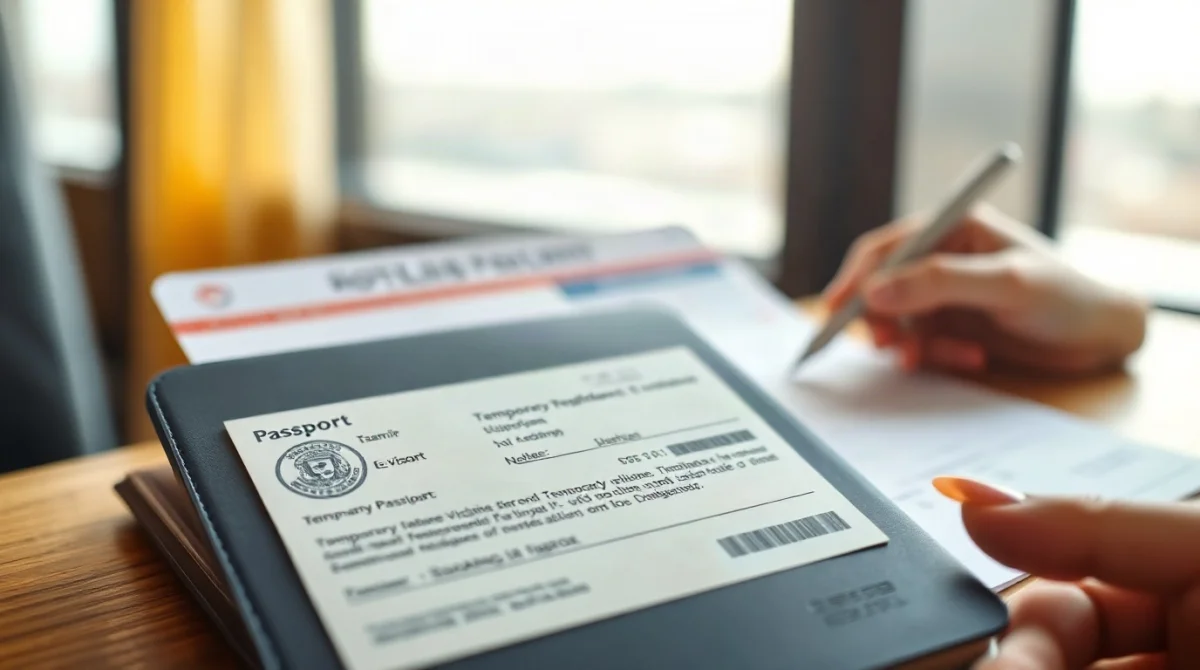
Immigration recommends filling in the pre-arrival form before entering Vietnam.1 At the border, examine the temporary residence certificate stamped into your passport and notify immigration if anything appears incorrect. Each time you move to new accommodation, declare it through that property’s manager.3
Travel insurance, an onward or return ticket, and proof of funds appear nowhere among the official entry conditions for e-visa holders, so the current e-visa portal and Vietnam’s Law on Entry, Exit, Transit, and Residence of Foreigners do not list them as requirements.
Common Mistakes to Avoid
- Duplicate applications. Submitting and paying for the same application twice creates two separate fees, and the earlier one is not refunded.1
- Incomplete or wrong information. The countdown restarts once valid details arrive. Information that is outright dishonest means denial.3
- Skipping violation history. Earlier entry violations have to be declared, otherwise the application may be refused.3
- Applying from inside Vietnam. Only foreigners abroad receive e-visas. Anyone already in the country must leave and re-enter on an approved e-visa.3
- Working without a permit. Foreigners employed in Vietnam need either a work permit or confirmation of exemption under the Labor Code.3
Frequently Asked Questions
Can Indian citizens get a visa on arrival in Vietnam?
No. Those holding Indian passports must have an e-visa before they travel, since no visa-on-arrival route exists for them. Apply online at evisa.gov.vn or thithucdientu.gov.vn before departure.
With an e-visa, what is the maximum length of time I may remain in Vietnam?
As long as 90 days, regardless of whether you pick single or multiple entry. A longer stay means contacting the Vietnamese Immigration Department about other visa options. Overstaying may bring fines, deportation, and restrictions on future entry.
If my application is rejected, can the fee for the Vietnam e-visa be refunded?
No. Whether you pay $25 USD for single entry or $50 USD for multiple entry, the fee is never refunded under any circumstances, denial of the application included. Government Resolution No. 30/2016/QH14 states this.1
Can I apply while already in Vietnam?
No. Visas are issued through the e-visa portal only to foreigners who are outside Vietnam at the time. Anyone inside the country would have to exit and re-enter so that a valid e-visa takes effect.3
How early can I apply?
As early as one year before the date you intend to enter.3 Processing usually finishes within 3 working days, though cases requiring police verification can take 3 to 15 working days. Bear that in mind and don’t leave it to the last minute.
To enter, am I required to have travel insurance or evidence of funds?
These do not appear as requirements on the e-visa portal. What matters is holding a valid passport and not being barred under Article 21 of Vietnam’s entry law.
Is it possible to leave via a border gate different from the one I used to enter?
Yes. There’s no obligation to leave Vietnam through the same gate you arrived at.3 Simply use one of the designated international gates listed on the e-visa portal.
If I send in a duplicate application for an e-visa, what occurs?
Each one counts as a separate application, and the earlier fee will not be returned once paid. If approval comes through for both, both remain equally valid.1 So check your email and the portal for an existing application before you apply.
Sources and Verification
- 1 Vietnam National e-Visa Portal (Immigration Department) – published e-visa notices – coverage of fees, 90-day validity, the non-refundable fee, processing times, duplicate applications, and the VietCombank payment portal (verified 2026-10-13)
- 2 Vietnam National e-Visa Portal (Immigration Department) – e-visa rules for foreigners: fees, eligibility, 90-day validity, entry conditions, plus photo and passport image requirements (verified 2026-10-13)
- 3 Vietnam National e-Visa Portal (Immigration Department) – FAQs – passport validity, eligibility, working days, border gates (verified 2026-10-13)
- Government of Viet Nam – E-visas for all nationalities (Resolution 127/NQ-CP) – every country and territory eligible from 15 August 2023 (verified 2026-10-13)
- Consular Department, Ministry of Foreign Affairs of Viet Nam – references on visa exemption (verified 2026-10-13)
- UK FCDO – Vietnam Travel Advice: Entry Requirements – guidance on passport validity and details of the 45-day exemption (verified 2026-10-13)