
Under a government resolution that stays in force until 14 March 2028, holders of British passports may visit Vietnam without a visa for tourism or business for as long as 45 days. If you plan to remain longer, the 90-day e-visa costs 25 USD for single entry or 50 USD for multiple entry, and it is usually processed within 3 working days.
You are reading an independent travel resource, and it is not a government page. Submit your application through the Vietnam National e-Visa Portal, a site we do not run. We neither collect payments nor file anything on your behalf, so verify the latest details there before you book.
Entry Rules for British Passport Holders
Whatever type of British passport you carry and whatever brings you to Vietnam, a full one grants you as many as 45 visa-free days for tourism or business. Your arrival date is when that 45-day count begins. Resolution No. 44/NQ-CP provides the exemption, running from 15 March 2025 through 14 March 2028 and open to extension later, as long as you satisfy every entry condition set by Vietnamese law.
Planning to stay beyond those 45 days? Here is what you can do:
- Request a 90-day e-visa, either single or multiple entry.
- Seek a different visa category from the Vietnamese Embassy in the UK.
- Turn to a travel agent based in Vietnam for a visa pre-approval letter.
Two pitfalls trip people up. Should you obtain an e-visa while already inside Vietnam on the visa-free stay, you will have to leave and come back in for it to take effect. When a stay would go past 90 days, get in touch with the Vietnamese Immigration Department yourself, because the British Embassy will not assist with extensions.
E-Visa Requirements and Documents
Two uploads are needed, along with a passport in good enough shape. Since 15 August 2023, the e-visa has been available to every nationality.
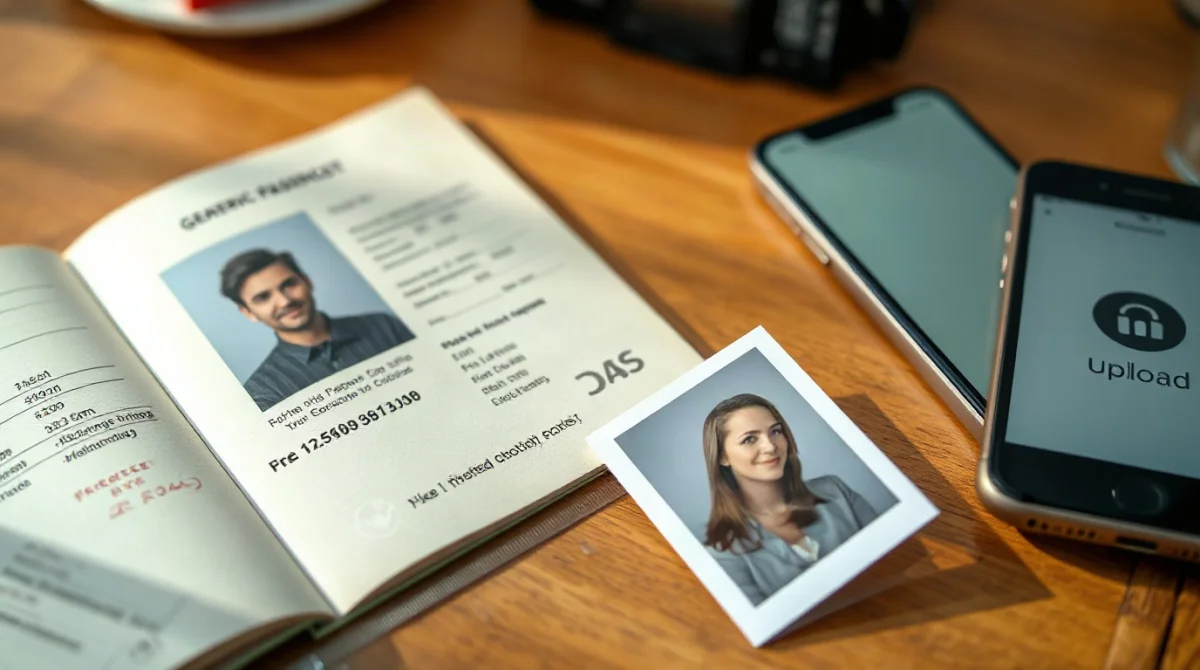
Portrait photo: taken recently, 4 x 6 cm, in JPG or JPEG format below 2 MB, with your face straight on, no hat or glasses, formal clothing and a white backdrop.
Passport data page image: a single sharp image with no corners missing.
According to the Immigration Department, your e-visa has to expire at least 30 days before your passport does. The UK FCDO, meanwhile, advises a passport that remains valid for at least 6 months after arrival, holds at least 2 blank pages and shows no damage, since British nationals have been refused entry and exit because of damaged passports.
Bear the following in mind:
- Use one passport for both entering and leaving Vietnam.
- Enter your name in capital letters, spelled exactly as the ICAO line shows it.
- E-visas are meant for foreigners who are still abroad, not for people already living in Vietnam.
- Provide every piece of information accurately and honestly in English. False details result in refusal.
- Disclose any violations committed during earlier visits. Omitting them can also get you denied.
Although an onward ticket, proof of funds and travel insurance do not appear among the e-visa conditions listed by Vietnamese sources, it still pays to plan sensibly.
E-Visa Cost and Processing Time
A single-entry e-visa costs 25 USD, while a multiple-entry one comes to 50 USD, paid online via the portal’s VietCombank gateway. No circumstances entitle you to a refund, not even a denied visa, since Resolution No. 30/2016/QH14 classifies the sum as a processing fee.
Once you have paid and sent in complete information, processing usually takes 3 working days; it stretches to 3 to 15 working days when the Police Department verifies your application. Weekends and public holidays do not count as working days. The portal runs on UTC+07:00, and up to 2 hours may pass before your payment status updates.
Information that is incomplete or invalid leads either to a request for further details or to refusal, and the countdown begins again from the moment you submit valid data. Avoid sending a duplicate, because the first fee is forfeited even when both applications are approved. Applications can be filed as much as a year ahead of your intended entry.
Applying for a Vietnam Visa for British Citizens
Everything happens online.

Visit the e-visa portal
Go to evisa.gov.vn or thithucdientu.gov.vn, the e-visa pages run by the Vietnamese government, and pick single-entry (25 USD) or multiple-entry (50 USD).
Upload your documents
Upload the portrait photo along with the image of your passport data page.
Complete every field
Fill in all fields in English, your name included, exactly as printed on the ICAO line.
Provide entry details
Give the border gates for entry and exit, the address of your first temporary residence, and trips taken in the past year.
Complete payment
Pay via the VietCombank gateway.
Wait for approval
Wait until your e-visa is approved, then show it to the immigration officers at the border.
Before You Fly
A pre-arrival form at prearrival.immigration.gov.vn is recommended by the Immigration Department. Starting 15 April 2026, Vietnam encourages a digital arrival card at Tan Son Nhat Airport. For now it is not compulsory, though that could change at short notice.
Those holding an e-visa have to enter and exit through designated gates: 15 airports, among them Noi Bai, Tan Son Nhat, Da Nang, Cam Ranh and Phu Quoc; 27 land gates, including Moc Bai, Huu Nghi and Lao Cai; and 39 seaports. Your entry and exit points do not have to match, but each one must appear on the list and be chosen in your application.
Before stepping away from the desk at the border, inspect the stamp in your passport. On a visa-free stay, the exit date ought to fall 45 days after arrival, and immigration officers will not amend it later.
Common Mistakes to Avoid
- Damaged or reported-lost passport. Entry will be refused.
- Picking the wrong border gate. Your e-visa works only at the points you chose, so verify them before you pay.
- Overstaying. Until you settle a fine, authorities may stop you leaving, and deportation plus an entry ban are possible.
- Paying twice by mistake. With a duplicate application, the first fee is gone.
Frequently Asked Questions (FAQ)
Can I apply for a Vietnam visa for British citizens while already in the country?
No. E-visas are intended for foreigners who are currently abroad. Should you be in Vietnam on the visa-free stay, you will need to leave and come back in before your e-visa becomes effective.
For a Vietnam visa for British citizens, how much passport validity do I need?
The Immigration Department states that your e-visa has to expire at least 30 days before your passport does. As for the UK FCDO, it advises at least 6 months of validity after arrival plus 2 blank pages.
With an e-visa, can I enter Vietnam through one border gate and exit through a different border gate?
Yes, provided both gates appear on the government’s approved list and you select them when you apply. Verify your chosen points before paying.
How early can I apply for my Vietnam e-visa?
As early as 1 year ahead of your planned entry. Processing usually takes 3 working days, or between 3 and 15 when police verification is required.
If my application is denied, is the e-visa fee refundable?
No. Under no circumstances is the fee refundable, since Resolution No. 30/2016/QH14 regards it as a processing fee.
Are any vaccinations required for entering Vietnam?
According to the WHO country list, Vietnam does not require a yellow fever certificate when you enter.
Is it possible to work in Vietnam on an e-visa?
No. To work you need the correct visa category plus a work permit, or confirmation under the Labour Code that you do not require one. Working illegally may result in a fine, deportation and an entry ban.
What are the consequences if I overstay my visa in Vietnam?
Until a fine is paid, authorities may prevent you from departing, and deportation along with a ban on future entry is possible. On arrival, check the exit date stamped in your passport.
Sources and verification
- Vietnam National e-Visa Portal (Immigration Department) – costs, validity, processing times, refunds (verified 2026-10-13)
- Government of Viet Nam online newspaper – the 45-day exemption under Resolution No. 44/NQ-CP (verified 2026-10-13)
- Viet Nam Immigration Department – photo rules and the e-visa application form (verified 2026-10-13)
- Vietnam National e-Visa Portal FAQ – border gates, declarations, passport validity (verified 2026-10-13)
- UK FCDO Vietnam travel advice – arrival card, visa-free stay, passport advice (verified 2026-10-13)
- Consular Department, Ministry of Foreign Affairs of Viet Nam – information on visa exemption (verified 2026-10-13)
- WHO vaccination requirements country list – entry requirements for yellow fever (verified 2026-10-13)
- Government of Viet Nam e-newspaper – e-visas for all nationalities under Resolution 127/NQ-CP (verified 2026-10-13)