
If you hold a Chinese passport, a visa is required for Vietnam, because China has not been added to the visa-free list. Vietnam has been granting e-visas to nationals of every country since 15 August 2023, which means the application can be made online at evisa.gov.vn. The charge is 25 USD for single entry or 50 USD for multiple entry, and the document stays valid for as long as 90 days.
We are an independent travel guide rather than a government website, and we do not file applications on your behalf. Our instructions follow official sources, but you should double-check the latest details on the official portal before setting off.
Is a Vietnam visa required for Chinese citizens?
Yes. Citizens of a number of countries, among them the UK, Japan and South Korea, are exempt from visas in Vietnam for stays of up to 45 days, yet China is not among them.
China became eligible for an e-visa, either single or multiple entry, both valid for up to 90 days, once Government Resolution No. 127/NQ-CP came into force on 15 August 2023. Our guides on e-visa eligibility and who needs a visa for Vietnam offer more background.
Fees, Validity and Processing Time
How much you pay depends on the number of entries you need. If you are thinking about a side trip to Cambodia or Laos, choose multiple entry.
| E-visa type | Fee | Entries | Maximum validity |
|---|---|---|---|
| Single entry | 25 USD | One entry | 90 days |
| Multiple entry | 50 USD | Unlimited entries within validity | 90 days |
E-visas are usually handled within 3 working days of payment, as stated on the Vietnam National e-Visa Portal. Should the Police Department decide to verify your application, the wait can stretch to between 3 and 15 working days, weekends and public holidays excluded.
The money cannot be recovered in any situation, even when the visa is refused, since it is a processing fee under Resolution No. 30/2016/QH14. Once you have paid, allow up to 2 hours for the status to refresh, and do not send the application again. Our guides on cost and processing time, single-entry and multiple-entry e-visas go into more detail.
Required Documents and Passport Rules
Only two images are needed, but each one has to satisfy precise requirements.

- Portrait photo: taken recently, 4 × 6 cm, JPG or JPEG, under 2 MB. Face the camera straight, wear formal clothes, remove hats and glasses, and use a white background.
- Passport data page image: a single sharp photo of the data page, with no corner cropped away.
According to the portal’s FAQ, the e-visa must expire at least 30 days before your passport does.
Write your name in uppercase, matching the ICAO line character for character. Travel insurance, an onward ticket and proof of funds are not required, because none of them are listed among the entry conditions in Article 20 of Vietnam’s entry law. Take a look at our pages on passport validity and insurance and tickets.
How to Apply: Step by Step
Everything is completed online in English, and you may begin as early as 1 year before your entry date.
Visit the e-visa portal
Go to evisa.gov.vn or thithucdientu.gov.vn.
Complete every field
Fill in all fields truthfully and precisely, in English.
Answer multiple-choice questions
Pick the option that fits; where you choose “Others”, spell out the specifics.
Upload your photos
Add your portrait photo together with the image of your passport data page.
Declare travel and violation history
List your trips from the past year and reveal any violation history, because concealing it can lead to a refusal.
Pay and wait for the outcome
Send the fee through the VietCombank payment portal, then wait for the result.
Only foreigners who are currently abroad may use the e-visa. Those already in Vietnam should leave first and apply once they have departed. Our full application guide and tips and scams page cover this in more depth.
If the process seems to be dragging, resist the urge to file a second application. Two identical submissions count as two separate applications for the Immigration Department, so both fees are charged and neither is returned. Missing information only restarts processing once valid details arrive, and any dishonest answer brings an automatic denial.
Entry Rules, Border Gates and What to Check
Obtaining the e-visa is only part of the job. The following points matter at the border:
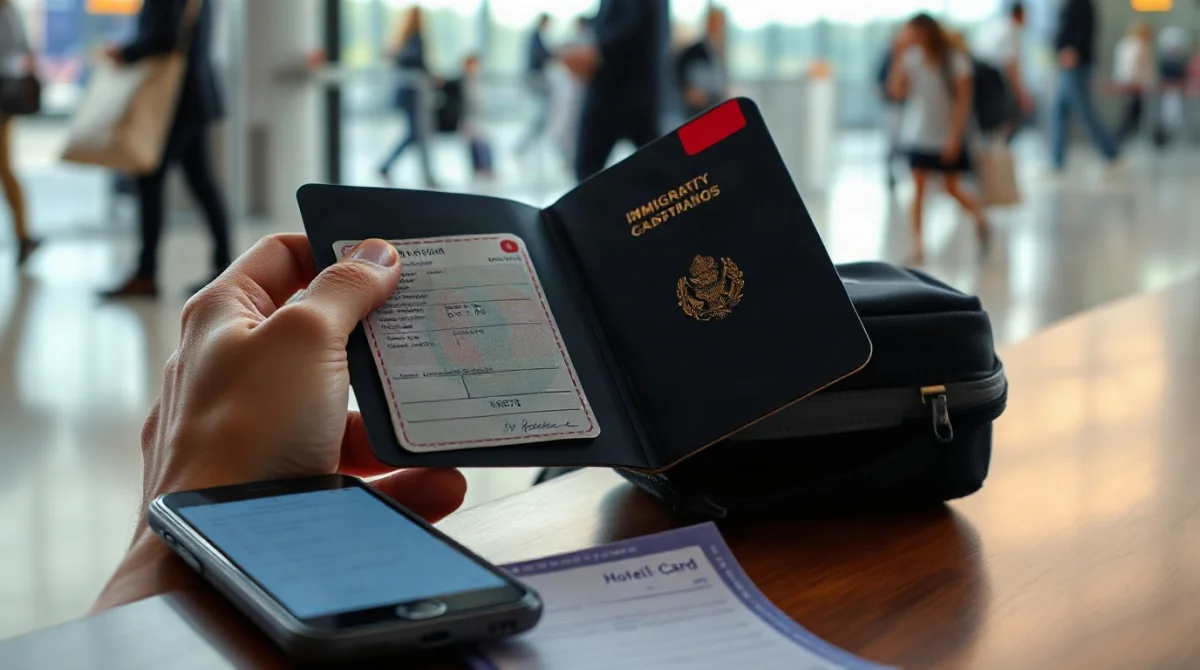
- Border gates: entry and exit must happen at international border gates designated by the government. The portal counts 15 air gates, 27 land gates and 39 sea gates. There is no requirement to leave through the same gate you entered.
- Pre-arrival form: the Immigration Department advises filling it in at prearrival.immigration.gov.vn prior to entry.
- Digital Arrival Card: starting 15 April 2026 it is encouraged (not mandatory) at Tan Son Nhat Airport in Ho Chi Minh City, and could appear at other airports at short notice.
- Same passport: per the UK FCDO’s travel advice, you have to enter and leave Vietnam using the same passport.
- Stamped dates: check the visa expiry date stamped in your passport before you step away from border control, since Immigration will not alter it afterwards.
- Temporary residence: give your first address on the application, then have your accommodation manager report every change.
- Working: a work permit, or written confirmation that you do not need one, is necessary if you intend to work.
While in the country, obey Vietnamese law, keep to the purpose you declared and carry your passport with you. Related guides: arrival card, registration after arrival, overstay penalties and customs and currency.
Common Mistakes to Avoid
- Applying from inside Vietnam. Leave the country first, then apply.
- Using a border gate that is not designated. Consult the government’s list before you book a land crossing.
- Hiding past violations. An undeclared history can result in your e-visa being denied.
- Sending in an application that is a duplicate. Two fees are charged and nothing is refunded. Let the processing time run out.
- Not performing the stamped-date check. Once you have passed the border, passport stamp mistakes cannot be corrected.
Frequently Asked Questions (FAQ)
How much does a Vietnam visa for Chinese citizens cost?
A single-entry e-visa is 25 USD and a multiple-entry one is 50 USD, paid online. No part of the fee is returned, even when the application is turned down.
How much time does processing a Vietnam e-visa take?
Payment is normally followed by 3 working days of processing. When the Police Department verifies an application, the wait runs from 3 to 15 working days.
Are Chinese citizens able to enter Vietnam without a visa?
No. Vietnam’s visa-exemption list does not include China, so an e-visa must be obtained before arrival at https://evisa.gov.vn.
While already in Vietnam, can I apply for a Vietnam visa for Chinese citizens?
No. E-visas go only to foreigners who are currently abroad. Leave the country first and apply afterwards.
Which border gates accept holders of a Vietnam e-visa?
Just the international gates designated by the government: 15 air gates, 27 land gates and 39 sea gates. The complete list appears on the e-visa portal.
What is the earliest I can apply for a Vietnam e-visa?
The portal’s FAQ states that applications may be submitted up to 1 year before the planned entry.
What occurs if I submit two e-visa applications that are identical?
They count as two separate applications. Both fees are charged without refund, and should both be approved, each visa is equally valid.
With a tourist e-visa, can I work in Vietnam?
No. A foreigner working in Vietnam requires a work permit or confirmation that no permit is needed. Illegal work can bring fines and deportation.
Sources
- Vietnam National e-Visa Portal (Immigration Department), e-visa notices: the fees, validity period, processing times and the rule that no refund is given (verified 2026-10-13)
- Viet Nam Immigration Department, e-visa application form: the images required and how they must be prepared (verified 2026-10-13)
- Vietnam National e-Visa Portal, FAQs: passport validity, the border gates and the rules for applying (verified 2026-10-13)
- Consular Department, Ministry of Foreign Affairs of Viet Nam, visa exemption: the list of nationalities exempt from visas (verified 2026-10-13)
- UK FCDO, Vietnam travel advice: entry requirements: border rules, the arrival card and passport requirements (verified 2026-10-13)
- Government of Viet Nam e-newspaper, Resolution 127/NQ-CP: e-visas open to every country since 15 August 2023 (verified 2026-10-13)