
If you hold a Japanese passport, you can enter Vietnam without a visa for up to 45 days. The exemption is valid from 15 March 2025 through 14 March 2028, and for longer stays a Vietnam e-visa permits up to 90 days and costs 25 USD for a single entry or 50 USD for multiple entries.
This guide explains both options for a Vietnam visa for Japanese citizens (VVJC), covering the visa-free stamp at the border and the e-visa application at evisa.gov.vn. We are an independent travel-information site, not a government office, and we do not submit applications for you. Check the details on the portal again before you travel.
Is a visa necessary for Japanese citizens to travel to Vietnam?
No. Japanese citizens are among 12 nationalities exempt from visas for 45 days, under Resolution No. 44/NQ-CP dated 7 March 2025, as reported by the Government of Viet Nam online newspaper.
The 45 days of temporary residence begin on the day you enter, and the resolution does not distinguish between passport types or entry purposes. You must still satisfy Vietnam’s legal entry conditions. The policy is in force from 15 March 2025 to 14 March 2028 and will be reviewed for extension. Resolutions 32/NQ-CP and 128/NQ-CP ceased to apply on 15 March 2025.
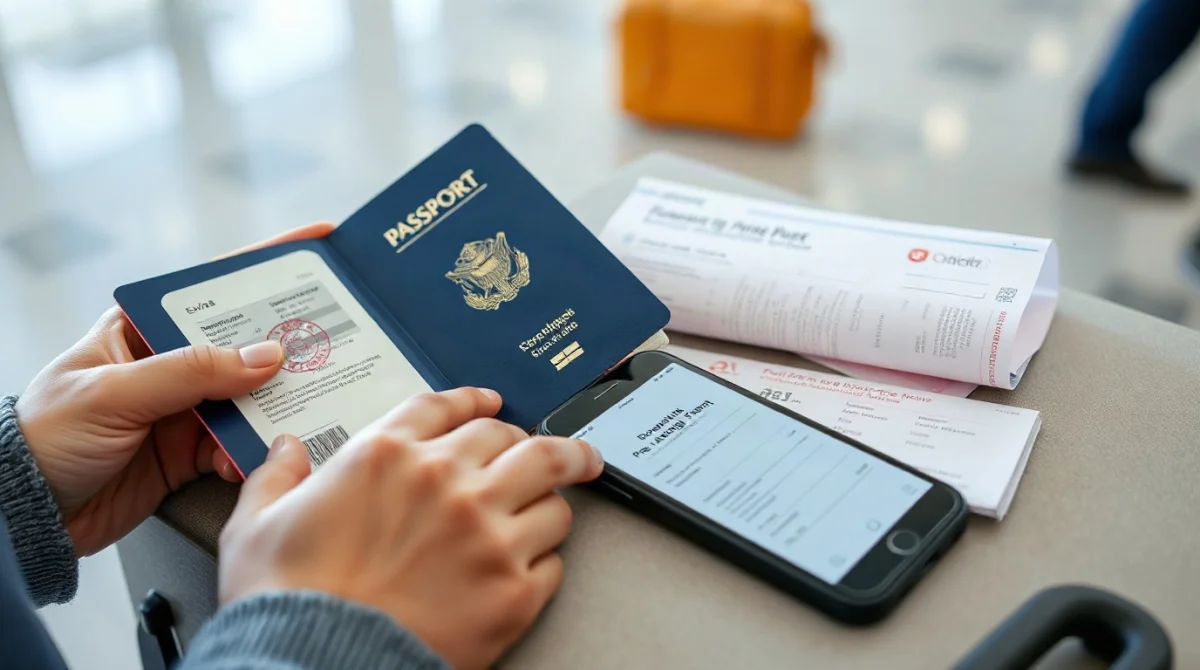
Check the exit date stamped in your passport before you leave border control, since immigration will not change it later. For a visa-free entry, that date should be 45 days from arrival.
If you need more than 45 days, the e-visa is the easiest option. Our guide to visa-free entry to Vietnam lists all exempt nationalities.
Vietnam Visa for Japanese Citizens: E-Visa Fees and Processing
A single-entry e-visa costs 25 USD and a multiple-entry e-visa costs 50 USD; both are valid for up to 90 days and normally take 3 working days to process.

| What you’re comparing | Single-Entry E-Visa | Multiple-Entry E-Visa |
|---|---|---|
| Fee | 25 USD | 50 USD |
| Validity | Up to 90 days | Up to 90 days |
| Entries | Single entry | Multiple entries |
| Processing time | Usually 3 working days | Usually 3 working days |
| If police verification is needed | 3 to 15 working days | 3 to 15 working days |
| Fee refundable | No, under any circumstances | No, under any circumstances |
Since 15 August 2023, under Resolution No. 127/NQ-CP, e-visas have been available to citizens of every country. Working days do not include weekends or public holidays, and payment status may take up to 2 hours to update.
The fee is paid through the VietCombank payment gateway and remains non-refundable even if your visa is refused. If you submit a duplicate application and pay twice, the first fee will not be returned, and if both applications are approved, both visas are valid.
You may apply up to 1 year before entry. Our Vietnam e-visa cost and processing page lets you compare options, and our single-entry and multiple-entry guides cover each type.
How to Apply for Your Vietnam E-Visa
Submit your application online with a portrait photo and a scan of your passport data page.
Visit the e-visa portal
Go to https://evisa.gov.vn, or use the alternative https://thithucdientu.gov.vn.
Upload your portrait photo
New photo measuring 4 × 6 cm, in JPG or JPEG format under 2 MB, with a white background, a straight face and no hat or glasses.
Upload your passport data page
One clear image of the passport data page; type your full name in uppercase exactly as it appears on the ICAO line.
List your trips and accommodation
In section 6.9, list the trips you took in the past year and give the first address where you will stay temporarily.
Disclose any violation history
Omitting it can lead to your application being denied.
Pay and wait for your e-visa
Pay 25 USD for a single entry or 50 USD for multiple entries through the VietCombank gateway, then wait for the e-visa by email, usually within 3 working days.
Two rules often trip people up. E-visas are not issued to foreigners who are already inside Vietnam, and if you obtain one while there, you must leave and re-enter to activate it, as the UK FCDO also notes. You must also use an international border gate designated by the government.
That includes 15 airports (Noi Bai, Tan Son Nhat, Da Nang, Cam Ranh and Phu Quoc among them), 27 land gates (Moc Bai, Huu Nghi and Lao Cai, for example) and 39 seaports. You do not have to exit through the same gate you entered.
Vietnam Visa for Japanese Citizens: Entry Requirements and Passport Rules
For an e-visa, your passport must remain valid for at least 30 days beyond the visa’s validity. We could not find any Vietnamese official source that states a passport-validity rule for visa-exempt visitors.
Even so, follow the six-month guideline. The UK FCDO advises an expiry date at least 6 months after arrival, at least 2 blank pages and no damage, and travellers have been denied entry over damaged passports. Vietnamese authorities also require entry and exit on the same passport.
Under Article 20 of the entry law, entry conditions come down to three things: a passport, a visa unless you are exempt, and not being barred from entry. I could not find any Vietnamese official source that lists travel insurance, an onward ticket or proof of funds as an entry requirement.
Airlines can still set their own boarding requirements, so check your carrier’s rules. From 15 April 2026, the Vietnamese Government encourages everyone flying into Tan Son Nhat Airport in Ho Chi Minh City to complete a digital arrival card online beforehand. It is not mandatory yet, but that could change with little notice.
Common Mistakes and After-Arrival Essentials
A few avoidable mistakes account for most problems at Vietnamese airports.
- Failing to check your entry stamp. Immigration will not correct the exit date once you have left border control.
- Overstaying. Authorities can detain you until a fine is paid, deport you and block future visits. Arrange an extension before your stay runs out.
- Omitting the pre-arrival form. The Immigration Department recommends completing it at https://prearrival.immigration.gov.vn before you land.
- Neglecting your temporary residence declaration. Present your passport at your accommodation and declare each new address when you move.
- Assuming an e-visa bought inside Vietnam will start working. It does not until you exit and re-enter.
- Treating a transit in Hanoi or Ho Chi Minh City as airside. If you connect to a domestic flight, you pass through immigration and enter Vietnam.
If your plans change, our guides on overstay penalties, extending your stay, registration after arrival and e-visa pitfalls cover each one in detail.
Frequently Asked Questions (FAQ)
How long can Japanese citizens stay in Vietnam without a visa?
Under Resolution No. 44/NQ-CP, you receive 45 days of temporary residence from your date of entry. The policy applies from 15 March 2025 to 14 March 2028.
With a Vietnam visa for Japanese citizens, can I stay for more than 45 days?
Yes. An e-visa from evisa.gov.vn allows up to 90 days, either as a single entry for 25 USD or as a multiple entry for 50 USD. You can apply up to 1 year before arrival.
What is the cost of the Vietnam e-visa, and where do I apply?
The fee is 25 USD for a single entry or 50 USD for multiple entry, paid through the VietCombank gateway on https://evisa.gov.vn. It is not refundable, and processing usually takes 3 working days.
While already in Vietnam, can I apply for a Vietnam visa for Japanese citizens?
No. E-visas are issued only to people who want to enter Vietnam. If you obtain one while inside, you must leave and re-enter for it to start.
What passport validity is needed for a Vietnam e-visa?
According to the e-visa portal’s FAQ, your passport must be valid at least 30 days beyond the visa’s validity. The UK FCDO advises, as a precaution, that the passport should expire no sooner than 6 months after arrival and have at least 2 blank pages.
Which border gates are accepting the Vietnam e-visa?
You have to use designated international gates: 15 airports, 27 land crossings, and 39 seaports, including Noi Bai, Tan Son Nhat, Moc Bai, and Lao Cai. You need not exit through the gate you entered.
Is travel insurance necessary for entry into Vietnam?
No Vietnamese official source states that it is required. Entry requirements include a passport, a visa unless exempt, and not being barred from entry. Airlines and insurers might still have rules of their own.
What are the consequences if I stay beyond my Vietnam visa or visa-free period?
Authorities can prevent you from leaving until you pay a fine, and they can deport you and bar you from returning. Make arrangements for any extension before your current stay expires.
Sources and verification
- Vietnam National e-Visa Portal (Immigration Department) – e-visa fees, validity and processing times (verified 2026-10-13)
- Government of Viet Nam online newspaper – Resolution No. 44/NQ-CP (verified 2026-10-13)
- Government of Viet Nam online newspaper – Resolution No. 229/NQ-CP (verified 2026-10-13)
- Embassy of Chile in Viet Nam – passport validity and documentation (verified 2026-10-13)
- Ministry of Foreign Affairs of Mongolia, Consular Department – visa-free stay limits by nationality (verified 2026-10-13)
- Viet Nam Immigration Department – e-visa application form and photo requirements (verified 2026-10-13)
- Vietnam National e-Visa Portal – FAQs – passport validity, name format and border gates (verified 2026-10-13)
- Consular Department, Ministry of Foreign Affairs of Viet Nam – entry visa exemption information (verified 2026-10-13)
- UK FCDO – Vietnam travel advice: entry requirements – passport validity, stamps, arrival card and overstay consequences (verified 2026-10-13)
- Government of Viet Nam e-newspaper – Resolution No. 127/NQ-CP (verified 2026-10-13)