
Thanks to a government resolution that stays in force through 14 March 2028, travellers holding Spanish passports may enter Vietnam without a visa and remain for as long as 45 days. Anyone planning a longer stay can instead take out a 90-day e-visa, priced at 25 USD for a single entry or 50 USD for multiple entries.
This guide deals with the Vietnam visa for Spanish citizens: the situations in which no visa is needed, the way to apply through the national e-visa portal, the fees involved, and what to expect at the border. We are an independent information service and have no government affiliation. Since we neither collect payments nor submit anything on your behalf, file your application yourself on the official portal and verify the details there before travelling.
Is a Vietnam Visa Required for Spanish Citizens?
For a journey of 45 days or fewer, no. Whichever passport type you carry and whatever reason you have for visiting, the exemption holds, as long as you satisfy Vietnam’s entry conditions. Alongside Spain, the same government resolution names 11 other countries, among them Germany, France, Italy, the UK, Japan, Norway and Finland.
15 Aug 2023
Viet Nam begins issuing e-visas to nationals of every country, permitting stays of up to 90 days
15 Mar 2025
45-day visa exemption for Spanish citizens takes effect
14 Mar 2028
Exemption expires; Vietnamese law requires review for possible extension
Vietnam E-Visa Requirements for Spanish Citizens
To apply, you need a passport and two images.
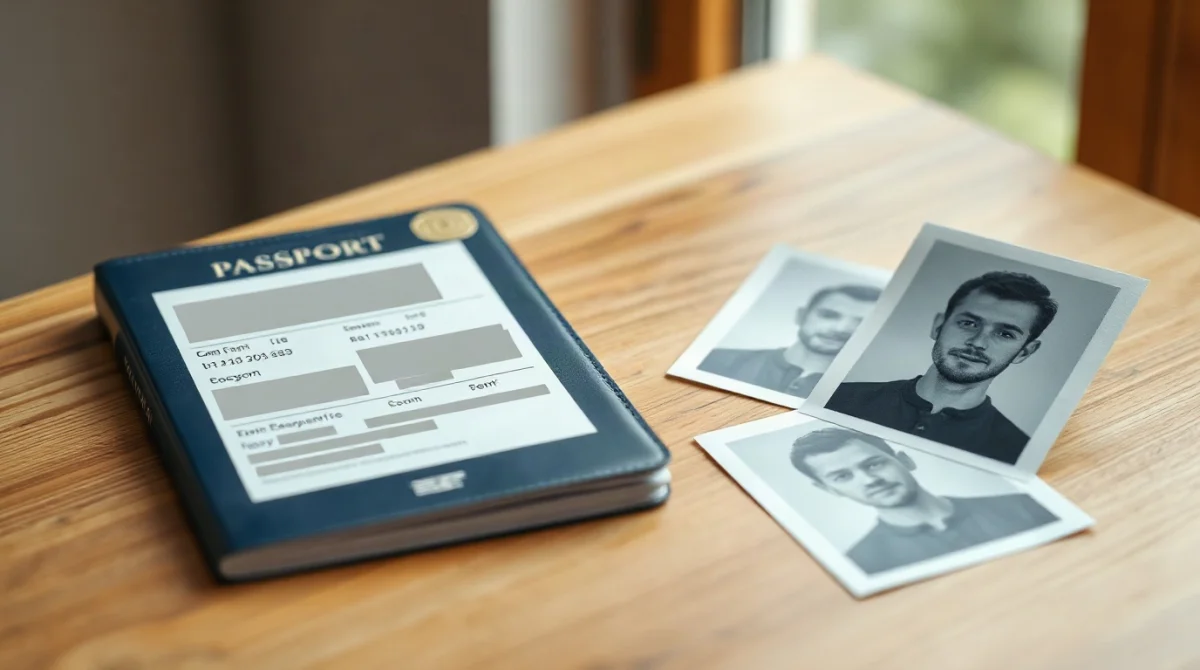
- Portrait photo – a recent shot measuring 4 × 6 cm, saved as JPG or JPEG below 2 MB, facing forward, without a hat or glasses, on a white background.
- Passport data page image – a single legible photograph in which none of the corners are cropped.
As the portal explains, your passport has to remain valid for at least 30 days beyond the visa’s expiry. While no Vietnamese source lays down a passport-validity requirement for visa-exempt visitors, the UK FCDO recommends a minimum of 6 months from arrival, along with two empty pages and an undamaged document. For more details on passport validity rules, check the full requirements.
Enter your name in capitals, matching precisely the ICAO line in your passport. Every piece of information must be given in English, accurately and truthfully, since applications containing dishonest statements are refused. Applications may be submitted as early as a year before your date of entry.
According to the e-visa portal, the conditions amount to holding a passport and not being covered by the cases of suspension from entry; an onward ticket, proof of funds and travel insurance do not appear on that list, and the WHO records no yellow fever vaccination requirement for entry.
E-Visa Cost and Processing Time
How often you cross the border determines the fee you pay. Each type remains valid for up to 90 days. You can review the full breakdown of e-visa costs and processing times in our dedicated guide.
| Option | Fee | Validity | Entries |
|---|---|---|---|
| Single-entry e-visa | 25 USD | Up to 90 days | One entry |
| Multiple-entry e-visa | 50 USD | Up to 90 days | Unlimited entries |
Provided your information is complete, the majority of e-visas are processed within 3 working days of payment. Should the Police Department need to verify the details, allow 3 to 15 working days, weekends and public holidays not included.
Under Resolution No. 30/2016/QH14, the fee cannot be refunded in any circumstances, including when a visa is denied. Payment goes through the VietCombank payment portal authorised by the Immigration Department, and your payment status may take up to 2 hours to update.
Filing and paying for a second, identical application will not return the first fee, so submit just one and wait.
How to Apply for a Vietnam E-Visa
The whole process is completed online, at evisa.gov.vn or thithucdientu.gov.vn. The order of steps is as follows:

Start a new application
Go to the national e-visa portal, begin a new application, and upload both your portrait and the image of your passport data page.
Complete every field
Fill in all fields in English with accurate, honest answers, covering trips taken during the past year and any previous violations.
Pay the fee
Send a payment of 25 or 50 USD using the VietCombank payment gateway.
Wait for processing
Allow 3 working days, or as many as 15 when verification is required.
Show your e-visa at the border
Present the approved e-visa to the immigration officers when you reach the border.
On arrival, pass through an international border gate designated by the Government. Of the 15 gates in total, the principal air crossings are Noi Bai, Tan Son Nhat, Da Nang, Cam Ranh and Phu Quoc, with land and sea gates also available. There is no requirement to exit through the same gate you entered by, but you are bound to the points you selected on the form. For a detailed walkthrough, see our step-by-step e-visa application guide.
Use one passport for both entry and exit, and inspect the temporary residence stamp before you leave the border area. For visa-free entry, that date ought to be 45 days from arrival, and immigration officials will not alter it afterwards.
Before you fly, the Immigration Department advises completing the pre-arrival form at prearrival.immigration.gov.vn. Give your first address on the application, and report each later change through whoever manages your accommodation.
Staying beyond your permitted time or working illegally may lead to a fine, deportation and a ban on future entry, so keep track of your departure date. Learn more about overstay penalties to avoid any issues.
Frequently Asked Questions (FAQ)
Can Spanish citizens enter Vietnam without a visa?
Correct, for stays of up to 45 days. Running since 15 March 2025 and lasting until 14 March 2028, the exemption covers every passport type and every purpose of travel.
What is the price of a Vietnam e-visa for Spanish citizens?
Single entry costs 25 USD, multiple entry 50 USD, with validity of up to 90 days. Payment is made online, and no refund is given if the visa is denied.
What is the processing time for a Vietnam e-visa?
Normally within 3 working days of payment, provided your information is complete. When verification is required, the wait extends to 3 to 15 working days, excluding weekends and public holidays.
What passport validity is needed for a Vietnam e-visa?
As the portal’s FAQ states, the e-visa has to expire at least 30 days before your passport does. Vietnamese sources set no rule for visa-exempt visits, though the UK FCDO advises at least 6 months of validity after arrival.
Am I able to enter and exit Vietnam through different border gates with an e-visa?
Yes. Exiting through the gate you entered by is not obligatory, but only approved gates may be used, along with the entry and exit points you chose when applying.
What are the consequences if I stay in Vietnam beyond my visa-free 45 days?
Possible consequences include a fine, being prevented from leaving until it is paid, deportation, or a ban on returning. Look at the exit date stamped in your passport at border control.
Do Spanish citizens need travel insurance to enter Vietnam?
No. Holding a passport and not being covered by the cases of suspension from entry in Article 21 of the entry law are the conditions the e-visa portal lists; travel insurance does not feature among them.
Where are Spanish citizens able to submit an application for a Vietnam e-visa?
Solely at evisa.gov.vn or its alternative address, thithucdientu.gov.vn. No other website accepts applications, and there is no need for a third party to file on your behalf.
Sources and verification
- Vietnam National e-Visa Portal (Immigration Department) – fees, validity, the non-refundable rule and processing times
- Government of Viet Nam online newspaper – Resolution No. 44/NQ-CP concerning the 45-day exemption
- Vietnam National e-Visa Portal – FAQs – passport validity, border gates and declarations
- Viet Nam Immigration Department – e-Visa application form – specifications for the photo and passport image
- Government of Viet Nam e-newspaper – Resolution 127/NQ-CP, e-visas for every nationality, lists of border gates
- UK FCDO – Vietnam travel advice – passport validity, the same-passport rule, consequences of overstaying
- WHO – vaccination requirements, country list – no yellow fever requirement for Vietnam
- Consular Department, Ministry of Foreign Affairs of Viet Nam – information on visa exemption