
Polish passport holders can enter Vietnam visa-free for up to 45 days for tourism purposes, based on a government resolution that remains in force until 14 August 2028. When a longer stay is needed, you can apply online for a 90-day e-visa costing 25 USD (single entry) or 50 USD (multiple entry), and processing normally takes 3 working days.
Both possibilities are set out below so that you can pick whichever suits your journey. Keep in mind that this is an independent travel information resource, not a government website. Before submitting anything, always confirm the fees and timeframes on the Vietnam National e-Visa Portal. We neither handle applications nor take payments.
Visa-Free Entry for Polish Citizens
For tourist stays not exceeding 45 days counted from the day of arrival, Polish citizens need no visa at all. This holds regardless of which passport type you carry, provided you satisfy the usual entry conditions set out in Vietnamese law.
This exemption originates in Government Resolution No. 229/NQ-CP, which forms part of the Tourism Stimulus Programme and applies between 15 August 2025 and 14 August 2028. Poland belongs to the group of 12 countries covered, together with Belgium, Bulgaria, Croatia, the Czech Republic, Hungary, Luxembourg, the Netherlands, Romania, Slovakia, Slovenia, and Switzerland.
An e-visa becomes necessary if your stay will run beyond 45 days or if you are travelling for reasons other than tourism. Since 15 August 2023, under Government Resolution No. 127/NQ-CP, the scheme has been open to citizens of every country and territory. It permits stays of up to 90 days and is offered in single-entry and multiple-entry versions.
Applying before departing is simpler than trying to extend your stay once you have already reached Vietnam.
Passport Validity and Entry Requirements
According to the portal’s FAQ section, an e-visa’s validity has to be at least 30 days shorter than your passport’s validity.
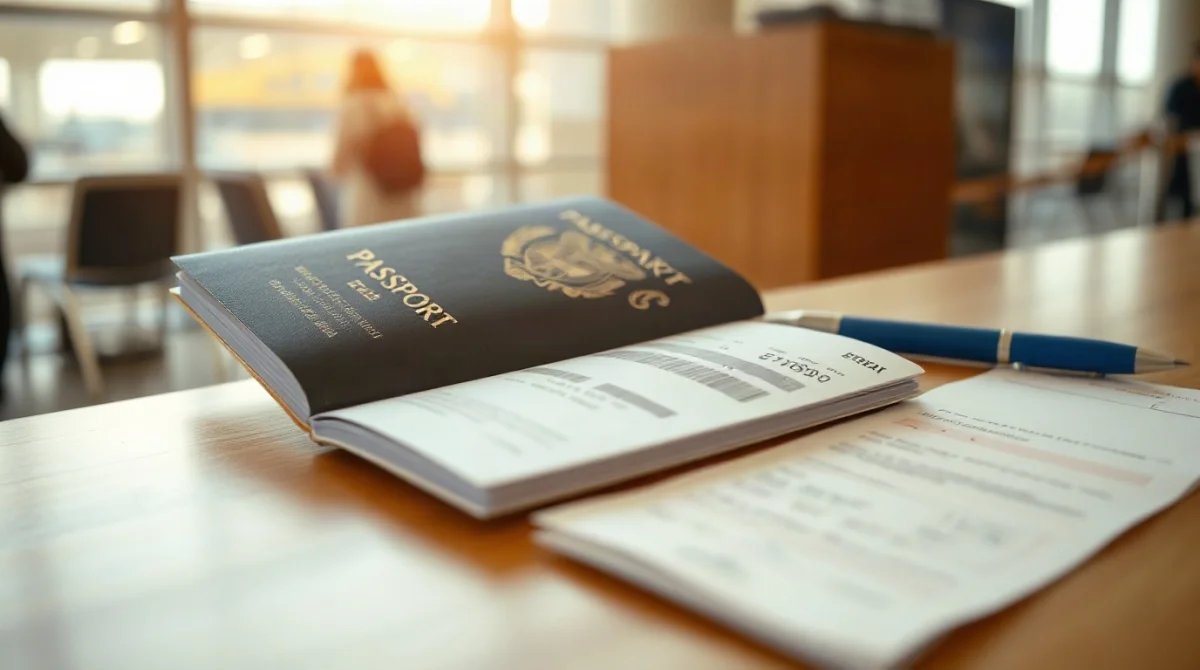
We could not locate any Vietnamese official source that lays down an explicit passport validity rule for those entering visa-free. British passport holders are advised by the UK Foreign Office to carry a passport that stays valid for at least 6 months beyond arrival, contains at least 2 blank pages and shows no damage; the same office notes that some nationals have been refused entry because their documents were damaged. Polish citizens would do well to follow the same standard. Remember as well that the passport used to enter Vietnam must be the one used to leave.
Travel insurance, an onward ticket and proof of funds do not appear among the entry conditions listed on the e-visa portal. Those conditions centre on holding a valid passport and on not falling under the suspension cases described in Article 21 of Vietnam’s Law on Entry, Exit, Transit, and Residence of Foreigners.
The Immigration Department suggests filling in a pre-arrival form at prearrival.immigration.gov.vn ahead of your flight.
E-Visa Cost and Processing Time
| E-visa type | Fee | Maximum validity | Entries |
|---|---|---|---|
| Single-entry | 25 USD | 90 days | One |
| Multiple-entry | 50 USD | 90 days | Unlimited within validity |
Payment goes through the portal’s payment gateway, which VietCombank runs on behalf of the Immigration Department. No refund is possible under any circumstances, even when a visa is refused, since the amount is a processing charge under Resolution No. 30/2016/QH14.
Once payment is made, standard e-visa processing time lasts 3 working days, assuming the details you supplied are complete and valid. Should the Police Department decide to verify your application, the wait can stretch from 3 to 15 working days. Weekends and Vietnamese public holidays are not counted. Allow up to 2 hours for the payment status to refresh.
Should you send a duplicate application by mistake, the fee paid earlier will not be returned. Each application is handled separately, and if both are approved, both stay equally valid. Missing or wrong information may reset the processing clock and can end in a refusal.
Applying for a Vietnam Visa for Polish Citizens
Required Documents
Have two images ready before you begin:
- Portrait photo – must be recently taken, 4 × 6 cm, in JPG or JPEG format and under 2 MB. Face the camera straight, wear formal clothes, and avoid hats or glasses; the background should be white.
- Passport data page – a single sharp image in which no corner is cropped.
Type your full name in uppercase letters exactly as it is printed on the ICAO machine-readable line of your passport, covering surname, middle name and given name.
Step-by-Step Process
Open the e-visa portal
Visit evisa.gov.vn or use the alternative address thithucdientu.gov.vn.
Provide personal and trip details
Include any journeys made during the past year with their entry and departure dates.
State your first address in Vietnam
Report any change of address through your accommodation manager after arrival.
Reveal any history of violations
Hiding past violations from earlier entries may lead to a refusal.
Attach required images
Upload your portrait photo and passport data page image.
Settle the fee
Pay via the portal’s payment gateway.
Wait and monitor status
Wait for processing and check your application status on the portal.
Applications may be submitted as much as 1 year before the date you intend to enter. Anyone already inside Vietnam has to leave the country first, since e-visas are not granted to foreigners who are currently resident there.
Common Mistakes and Border Rules
- Not checking the entry stamp – the exit date is stamped into your passport by Immigration. Before you walk away from border control, make sure it shows 45 days from your arrival, because it cannot be fixed afterwards.
- Using a different passport for exit – the passport you arrive with must also be the one you leave with. People holding dual nationality should stick to a single document in both directions.
- Overstaying – you can be stopped from departing until a fine is paid, and deportation plus a ban on future visits is also possible. Read more about overstay penalties in Vietnam.
- Using the wrong border gate with an e-visa – only government-designated international gates may be used by e-visa holders, and the portal’s current FAQ counts 15 air, 27 land and 39 sea gates. There is no requirement to leave through the same gate you entered by, yet each one must appear on the approved list. Noi Bai, Tan Son Nhat, Da Nang and Cam Ranh are among the air gates, while Moc Bai, Huu Nghi and Lao Cai are among the land gates.
- Applying for an e-visa while in Vietnam – to activate it, you have to depart and come back in.
- Skipping the pre-arrival form – the Immigration Department advises filling it in at prearrival.immigration.gov.vn. At Tan Son Nhat Airport (Ho Chi Minh City), a digital arrival card has been encouraged since 15 April 2026. It is not compulsory as yet, though it might be rolled out to other airports at short notice.
Frequently Asked Questions (FAQ)
Can Polish citizens enter Vietnam without a visa?
Yes. Under Resolution No. 229/NQ-CP, which runs from 15 August 2025 to 14 August 2028, holders of Polish passports may enter without a visa for 45 days for tourism at most. Anything longer, or any trip that is not for tourism, calls for an e-visa instead.
What is the price of a Vietnam visa for citizens of Poland?
Entering visa-free costs nothing. For an e-visa, you pay 25 USD for single entry or 50 USD for multiple entry, online at evisa.gov.vn. Even a refused application does not entitle you to a refund.
What is the processing duration for an e-visa?
Usually 3 working days once payment is made, provided your details are complete and valid. When the Police Department decides to verify the application, the process may take as long as 15 working days.
What passport validity is required for Polish citizens to enter Vietnam?
An e-visa has to be at least 30 days shorter than the validity of the passport it is linked to. Where visa-free entry is concerned, no Vietnamese source lays down a rule, though the UK Foreign Office recommends 6 months of validity from arrival, 2 blank pages and an undamaged document.
Is it possible to apply for a Vietnam e-visa when I am already in Vietnam?
No. An e-visa only becomes active once you leave the country and enter again. Should you need more time, get in touch with the Vietnamese Immigration Department directly.
Which border gates allow entry to e-visa holders?
Only government-designated international gates are open to e-visa holders, and the portal’s current FAQ counts 15 air, 27 land and 39 sea gates. Among the main ones are Tan Son Nhat (HCMC), Noi Bai (Hanoi), Da Nang and Moc Bai. Leaving through a different gate than the one you arrived by is allowed.
Is travel insurance a requirement for entry into Vietnam?
No. Travel insurance is not among the entry conditions listed by Vietnamese authorities. Even so, taking out insurance makes sense on any trip abroad.
What occurs if I stay beyond my visa-free period in Vietnam?
Until a fine is paid, authorities may stop you from leaving. According to the UK Foreign Office, deportation and a ban on future visits are also possible. Always look at the exit date stamped in your passport.
Sources and Verification
- Vietnam National e-Visa Portal (Immigration Department) – notices about e-visa fees, validity and processing time (verified 2026-10-13)
- Vietnam National e-Visa Portal – answers to frequently asked questions (verified 2026-10-13)
- Viet Nam Immigration Department – the e-visa application form used by foreigners (verified 2026-10-13)
- Government of Viet Nam – Resolution No. 229/NQ-CP on visa exemption for 12 countries (Tourism Stimulus Program) (verified 2026-10-13)
- Government of Viet Nam – Resolution No. 44/NQ-CP concerning visa exemption for 12 countries (verified 2026-10-13)
- Government of Viet Nam – Resolution No. 127/NQ-CP on e-visas for citizens of every country and territory (verified 2026-10-13)
- UK Foreign Office – travel advice for Vietnam covering entry requirements (verified 2026-10-13)